
Last updated: October 2026, Written by: Behavioral Health Care, P.C.
Medically reviewed by: Dr. Marjaneh Rouhani, M.D., Board-Certified Psychiatrist
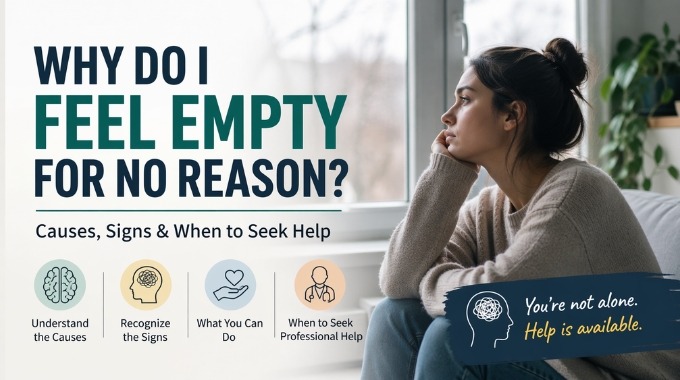
Feeling empty for no reason is often linked to emotional burnout, chronic stress, or mental health conditions like Depression. It usually means your mind is overwhelmed or emotionally disconnected, even if everything seems fine externally. If this feeling lasts more than two weeks or begins to affect your daily life, it’s important to seek professional help.
Have you ever had days where everything seems normal on the outside, yet inside you feel disconnected, unmotivated, or completely blank?
This experience is more common than you might think. Many people struggle with emotional emptiness at different stages of life, but they often don’t understand what it means or what to do about it.
Quick Answer: Why Do I Feel Empty for No Reason?
Feeling empty can be linked to stress, emotional exhaustion, loneliness, anxiety, or depression. It may cause emotional numbness, disconnection, or low motivation. If the feeling persists or affects daily life, consider speaking with a mental health professional.
This guide will help you understand why this happens, how to recognize warning signs, and what steps you can take to feel better.
What Does “Feeling Empty” Really Mean?
Feeling empty is not the same as feeling sad. Sadness is an emotion you can identify, but emptiness is often the absence of emotion.
People describe it as:
- Feeling disconnected from themselves or others
- Lack of interest in activities they once enjoyed
- A sense that nothing feels meaningful
- Difficulty experiencing happiness or excitement
This state is often referred to as emotional numbness. It is your mind’s way of coping when it becomes overwhelmed or exhausted.
Why Do I Feel Empty All of a Sudden?
Feeling empty all of a sudden can be associated with stress, emotional exhaustion, grief, or changes in your life. Sometimes, emotional numbness appears without an obvious reason.
You may feel disconnected from others, lose interest in activities, or struggle to understand your emotions. These experiences can have different causes and do not automatically mean you have depression.
If the feeling keeps returning, lasts for several weeks, or interferes with daily life, a mental health professional can help you understand what may be contributing to it.
For more information about depression and its symptoms, visit the National Institute of Mental Health (NIMH).
Why Do You Feel Empty? Common Causes
There is rarely a single cause. Emotional emptiness usually develops due to a combination of mental, emotional, and lifestyle factors.
1. Depression
One of the most common causes is Depression.
Depression does not always appear as sadness. In many cases, it presents as:
- Loss of interest in daily activities
- Low motivation
- Emotional flatness
This is why many people don’t realize they may be dealing with depression.
You can follow simple steps from our guide on how to cheer yourself up when depressed.
2. Chronic Stress and Burnout
Long-term stress from work, relationships, or responsibilities can overwhelm your mental capacity.
When your brain is under constant pressure, it may respond by shutting down emotions to protect itself.
This can lead to:
- Mental exhaustion
- Reduced emotional response
- Feeling detached from life
Learn more about stress recovery in our chronic stress guide.
3. Poor Sleep and Mental Fatigue
Sleep plays a major role in emotional regulation.
Lack of proper sleep can cause:
- Irritability
- Low energy
- Difficulty focusing
- Emotional imbalance
Over time, this can contribute to a persistent feeling of emptiness.
4. Anxiety and Overthinking
Conditions like Anxiety disorder keep your mind constantly active.
When your brain is always processing thoughts, worries, or fears, it becomes mentally exhausted. This exhaustion can lead to emotional numbness.
5. Unprocessed Emotions
Sometimes, emotional emptiness comes from avoiding or suppressing difficult feelings such as:
Instead of processing these emotions, your mind may “switch off” feelings altogether.
6. Lack of Purpose or Direction
Feeling lost in life or lacking clear goals can also contribute to emptiness.
When daily life feels repetitive or meaningless, it becomes harder to stay emotionally engaged.
When Is Feeling Empty a Warning Sign?
Feeling empty occasionally is normal. Everyone experiences emotional ups and downs.
However, it may be a concern if:
- The feeling lasts for several weeks
- You feel disconnected most of the time
- You lose interest in activities you used to enjoy
- Daily responsibilities start feeling overwhelming
In such cases, it may indicate an underlying mental health condition that needs attention.
Emotional Numbness vs Depression
Understanding the difference is important.
Emotional numbness:
- Temporary or situation-based
- Often linked to stress or fatigue
Depression:
- Persistent and long-lasting
- Affects multiple areas of life
- Includes symptoms like low mood, fatigue, and loss of interest
Emotional numbness can be a symptom of depression, but not always.
How Emotional Emptiness Affects Your Life
If left unaddressed, this feeling can impact multiple areas:
- Work performance may decline due to lack of focus
- Relationships may suffer due to emotional disconnection
- Motivation for daily tasks may decrease
- Overall quality of life may be affected
Recognizing this early can help prevent further complications.
What You Can Do to Feel Better
Improving emotional well-being takes time, but small steps can make a significant difference.
1. Start With Small Actions
Do not wait to feel motivated. Motivation often follows action.
Begin with simple steps:
- Go for a short walk
- Maintain a basic routine
- Complete small daily tasks
These actions help rebuild a sense of control and stability.
2. Improve Sleep and Routine
A consistent sleep schedule can improve both mental and emotional health.
Try to:
- Sleep at the same time daily
- Reduce screen time before bed
- Create a calming bedtime routine
3. Talk to Someone
Sharing your thoughts with someone you trust can reduce emotional pressure.
This could be:
- A friend or family member
- A counselor or therapist
Talking helps process emotions instead of suppressing them.
4. Try Professional Therapy
Therapy provides structured support to understand and manage your thoughts.
One effective method is Cognitive Behavioral Therapy, which focuses on identifying negative thinking patterns and replacing them with healthier ones.
5. Seek Psychiatric Help if Needed
If the feeling persists, consulting a mental health professional is important.
A psychiatrist can:
- Diagnose underlying conditions
- Recommend appropriate treatment
- Guide long-term recovery
6. Consider Advanced Treatment Options
In cases where traditional treatments are not effective, options like Transcranial Magnetic Stimulation may be recommended.
This is a non-invasive treatment used for certain mental health conditions, particularly depression.
Is It Stress or Something More?
It can be difficult to tell whether your feelings are temporary or something more serious.
Stress:
- Usually linked to a specific situation
- Improves when the situation changes
Mental health condition:
- Persists over time
- Affects multiple aspects of life
If your symptoms continue despite changes in your environment, it may be time to seek help.
When Should You Seek Help?
You should consider professional support if:
- The feeling of emptiness does not go away
- You feel emotionally disconnected most of the time
- Daily life becomes difficult to manage
- You feel hopeless or stuck
Seeking help early can lead to faster and more effective recovery.
Final Thoughts
Feeling empty does not mean something is wrong with you. It is often a signal that your mind needs rest, support, or attention
Ignoring it can make things more difficult over time, but addressing it early can help you regain emotional balance and improve your overall well-being.
Take the First Step Toward Feeling Better
If you are struggling with persistent emotional emptiness, professional help is available.
Consulting a qualified mental health professional can provide clarity, support, and a clear path forward.
Frequently Asked Questions
Why do I feel empty even when everything is fine?
This can be due to stress, burnout, or underlying mental health conditions such as depression.
Is feeling empty a symptom of depression?
Yes, emotional numbness is a common symptom of depression, although it can also occur due to stress or fatigue.
Can therapy help with emotional emptiness?
Yes, therapies like Cognitive Behavioral Therapy are effective in helping individuals understand and manage their emotions.
How long does this feeling last?
It depends on the cause. Temporary stress may pass quickly, but persistent feelings may require professional support.
Why do I feel empty but not sad?
You may experience emotional numbness without feeling sad. Stress, exhaustion, and mental health concerns can contribute to this feeling.
Is it normal to feel empty for no reason?
Feeling empty occasionally can happen to anyone. If it persists, returns frequently, or affects daily life, consider seeking professional support.
Why do I feel so empty and unmotivated?
Stress, burnout, poor sleep, and depression can contribute to feelings of emptiness and low motivation. The underlying cause varies from person to person.