
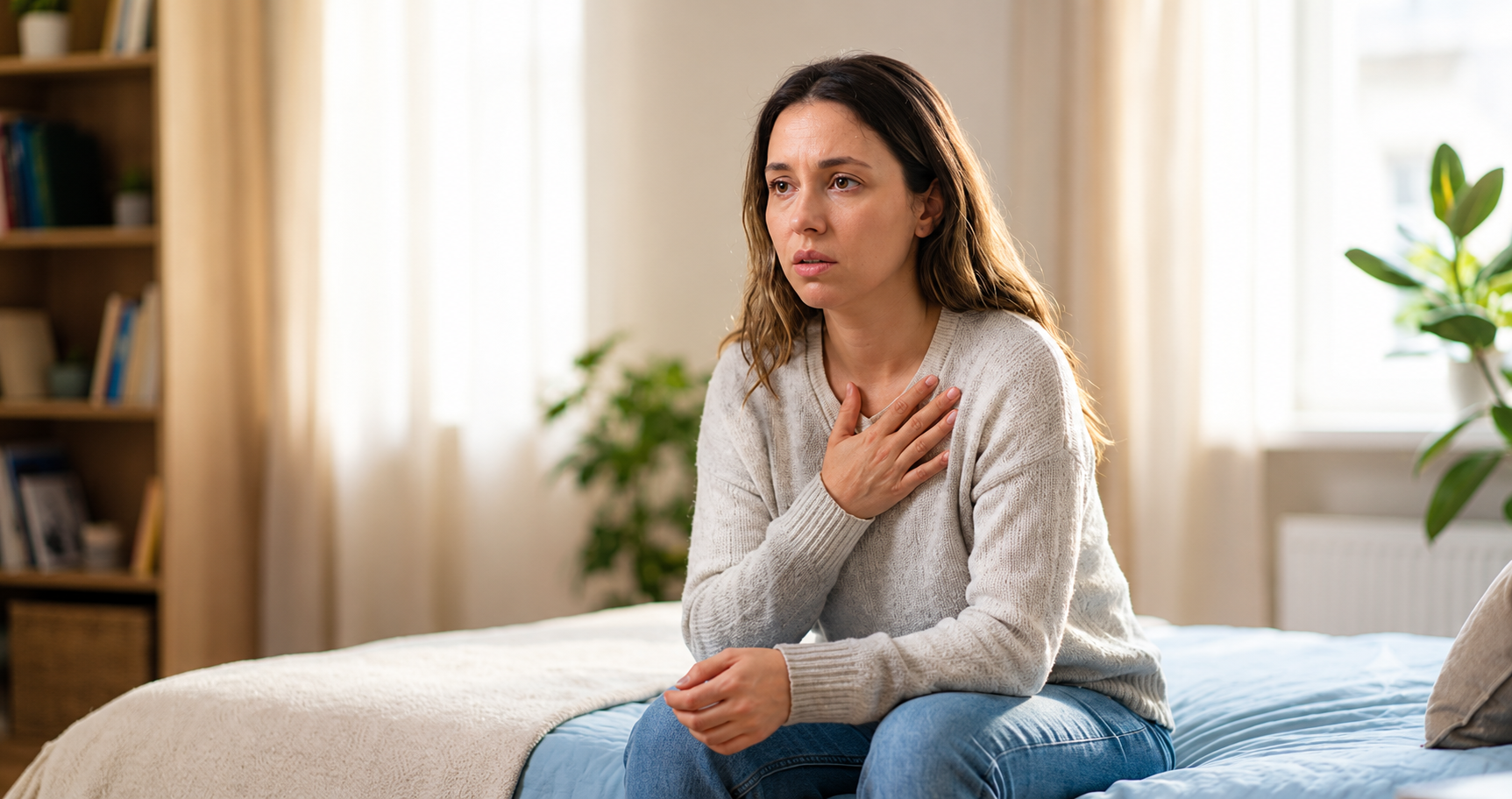
Anxiety does not always begin with an obvious feeling of worry. Sometimes, your body notices it first. You may feel your heart racing, your breathing becoming faster, your muscles tightening, or your stomach suddenly feeling unsettled.
These physical reactions can happen because anxiety activates the body’s stress response, preparing you to respond to a perceived threat. Occasional anxiety is a normal part of life, but persistent or overwhelming anxiety can interfere with daily activities. The National Institute of Mental Health (NIMH) explains that anxiety disorders involve more than occasional worry or fear and can affect everyday functioning.
So, what are the most common physical signs of anxiety?
What Are 5 Physical Signs of Anxiety?
The five physical signs of anxiety discussed below are:
- Racing or pounding heart
- Rapid or shallow breathing
- Muscle tension
- Sweating or trembling
- Stomach or digestive discomfort
These symptoms can occur when your body’s stress response becomes activated. However, physical symptoms do not automatically mean anxiety is the cause. Similar symptoms can occur with other medical conditions, medications, caffeine, or other factors.
1. Racing or Pounding Heart
One of the most noticeable physical symptoms of anxiety is a racing, pounding, or faster-than-usual heartbeat.
When you feel anxious, your body may enter a state of heightened alertness. Your heart may beat faster as part of the body’s response to perceived danger.
You may notice:
- A racing heartbeat
- A pounding sensation in your chest
- Feeling unusually aware of your heartbeat
- A faster pulse during periods of worry or fear
Although this can feel alarming, a fast heartbeat can occur with anxiety. If you have new, severe, or persistent heart-related symptoms, however, it is important to have them medically evaluated rather than assuming they are caused by anxiety.
2. Rapid or Shallow Breathing
Anxiety can also change the way you breathe. You may notice that your breathing becomes faster, shallower, or more noticeable when you are worried or frightened.
This can feel like:
- Shortness of breath
- Difficulty taking a satisfying breath
- Rapid breathing
- Feeling as though you cannot get enough air
The experience can sometimes increase your anxiety because breathing changes may make you more aware of physical sensations in your body.
3. Muscle Tension
Persistent anxiety can keep your body in a state of physical alertness, which may cause your muscles to tighten.
You might notice tension in your:
- Jaw
- Neck
- Shoulders
- Back
- Other muscle groups
Over time, ongoing tension may contribute to soreness, stiffness, headaches, or general body discomfort. Muscle tension is also recognized as a physical symptom associated with anxiety disorders by the National Institute of Mental Health.
4. Sweating or Trembling
Sweating and trembling can occur when your body’s stress response is activated.
You may experience:
- Sweaty palms
- Increased sweating
- Shaking or trembling
- Feeling physically restless
These symptoms can be especially noticeable during moments of intense fear, nervousness, or anticipation.
5. Stomach or Digestive Discomfort
Anxiety can affect your digestive system as well as your heart and breathing.
Some people experience:
- Nausea
- Stomach discomfort
- Abdominal tension
- Changes in bowel habits
- A feeling of having “butterflies” in the stomach
The National Institute of Mental Health lists stomachaches and other physical symptoms among symptoms that may occur with generalized anxiety disorder.
You can also learn more about anxiety-related physical symptoms through MedlinePlus’ overview of anxiety.
What Does Anxiety Feel Like Physically?
Anxiety can feel different from person to person. For some people, the main sensation may be a racing heart. For others, it may feel more like muscle tension, difficulty breathing, sweating, trembling, or stomach discomfort.
You may notice several symptoms at the same time, particularly during periods of intense worry or fear.
The important point is that physical symptoms of anxiety are real. They are not simply “in your head.” At the same time, these symptoms are not specific to anxiety, so recurring or concerning physical symptoms should not automatically be attributed to anxiety.
How Does Anxiety Affect the Body?
Anxiety can activate the body’s stress response. This response helps prepare you to respond to a perceived threat by increasing alertness and producing physical changes.
That can explain why anxiety may affect several parts of the body at once.
For example, you may notice:
- Your heart beating faster
- Your breathing changing
- Your muscles becoming tense
- Increased sweating
- Digestive discomfort
Anxiety can also affect everyday functioning. If physical symptoms, worry, or avoidance begin interfering with your sleep, concentration, relationships, work, or responsibilities, it may be worth discussing them with a healthcare professional.
For more information, read MiMood’s guide on How to Know If Anxiety Is Affecting Your Daily Life.
Are Anxiety Symptoms the Same as Panic Attack Symptoms?
Anxiety and panic attacks can share several physical symptoms, including a racing heart, rapid breathing, sweating, trembling, and nausea.
However, they are not exactly the same.
Anxiety symptoms may develop gradually, particularly during ongoing periods of worry or stress. A panic attack, on the other hand, typically involves a sudden episode of intense fear or discomfort that can produce strong physical symptoms.
According to the National Institute of Mental Health, panic attacks can include a pounding or racing heart, sweating, trembling, difficulty breathing, dizziness, chest pain, and stomach symptoms.
Experiencing a panic attack does not necessarily mean that you have panic disorder. Some people experience one or occasional panic attacks without developing panic disorder.
If you experience sudden or severe physical symptoms and are unsure whether they are related to anxiety, a healthcare professional can help determine what may be causing them.
When Should You Talk to a Healthcare Professional?
You do not have to wait until physical symptoms become severe before seeking help.
Consider talking with a healthcare professional if anxiety symptoms:
- Keep coming back
- Are difficult to manage
- Affect your sleep
- Interfere with work, school, or relationships
- Cause you to avoid normal activities
- Make it difficult to manage everyday responsibilities
You should also seek urgent medical attention for severe or sudden symptoms such as significant difficulty breathing, fainting, severe chest pain, or symptoms that are rapidly worsening. Physical symptoms should not automatically be assumed to be anxiety because some medical conditions can cause similar sensations.
What Can Help With Physical Symptoms of Anxiety?
The right approach depends on what is causing your symptoms and how significantly they affect your life. Some strategies may help reduce physical tension and support your overall well-being.
Slow Your Breathing
Slowing your breathing can help you become more aware of your breathing pattern and may help you feel more settled during periods of anxiety.
Relax Tense Muscles
Pay attention to areas where you hold tension, such as your jaw, shoulders, or neck. Intentionally relaxing these areas can help reduce physical tension.
Stay Physically Active
Regular physical activity can support overall mental and physical well-being and may help you manage stress and anxiety.
Maintain Consistent Sleep
A consistent sleep routine can support your overall well-being. Poor sleep can also make it harder to cope with stress and anxiety.
Notice Your Triggers
Pay attention to when physical symptoms occur. Identifying patterns around situations, thoughts, caffeine, sleep, or stress may help you understand what contributes to your symptoms.
Consider Professional Support
If anxiety continues to affect your daily life, professional support can help you understand your symptoms and explore appropriate treatment options.
For practical strategies, see How to Calm Down Anxiety: What Actually Works Fast.
Frequently Asked Questions
What are the 5 physical signs of anxiety?
Five common physical signs are a racing or pounding heart, rapid breathing, muscle tension, sweating or trembling, and stomach or digestive discomfort. Anxiety can affect people differently, so not everyone experiences all five.
What does anxiety feel like physically?
Anxiety may feel like a racing heart, faster breathing, muscle tension, sweating, trembling, nausea, or stomach discomfort. Some people experience several symptoms at once.
Can anxiety cause shortness of breath?
Yes. Anxiety can affect breathing and may cause a sensation of shortness of breath or difficulty getting a satisfying breath. However, breathing difficulties can have other causes, so persistent or severe symptoms should be medically evaluated.
Can anxiety cause stomach problems?
Yes. Anxiety can be associated with nausea, stomach discomfort, and other digestive symptoms. If digestive symptoms are persistent, severe, or unexplained, speak with a healthcare professional.
How do I know if my physical symptoms are caused by anxiety?
It is not always possible to determine the cause based on symptoms alone. A healthcare professional can consider your symptoms, medical history, timing, and other possible causes to help determine whether anxiety may be contributing.
Final Takeaway
Anxiety can affect much more than your thoughts. Physical signs such as a racing heart, changed breathing, muscle tension, sweating, trembling, and stomach discomfort can all occur during periods of anxiety.
If these symptoms keep returning or begin affecting your everyday life, you do not have to manage them alone. Understanding the pattern and getting appropriate professional guidance can be an important first step.
Get Support for Anxiety
If physical anxiety symptoms are affecting your daily life, MiMood provides personalized mental health support in Michigan.
Our team offers anxiety care for individuals in Battle Creek and Grand Rapids, with treatment approaches tailored to each person’s needs.
Learn more about Anxiety Treatment in Michigan or contact MiMood at 888-810-3201 to learn more about available care.
Medical Disclaimer
This article is for educational and informational purposes only and is not intended to diagnose, treat, or replace professional medical advice. Physical symptoms such as chest pain, shortness of breath, dizziness, or a racing heartbeat can have causes other than anxiety. If you experience severe, sudden, or concerning symptoms, seek appropriate medical evaluation.