
Medical Review: August 2026 Medically Reviewed By: Dr. Marjaneh Rouhani, MD
Credentials: Board-Certified Psychiatrist; Diplomate, American Board of Psychiatry and Neurology; Assistant Professor, Michigan State University
Anxiety doesn’t wait for a convenient moment. It shows up before a meeting, mid-conversation, at 2 a.m. So the real question isn’t just how to calm anxiety in general. It’s what actually works in the next 60 seconds, and what helps beyond that.
There’s genuine research behind some of this. Not all of it.
The Fastest Tool: The Physiological Sigh
If you only remember one technique, make it this one. A 2023 Stanford study, led by Huberman and colleagues, directly compared several breathing methods against mindfulness meditation for reducing anxiety and physiological arousal.
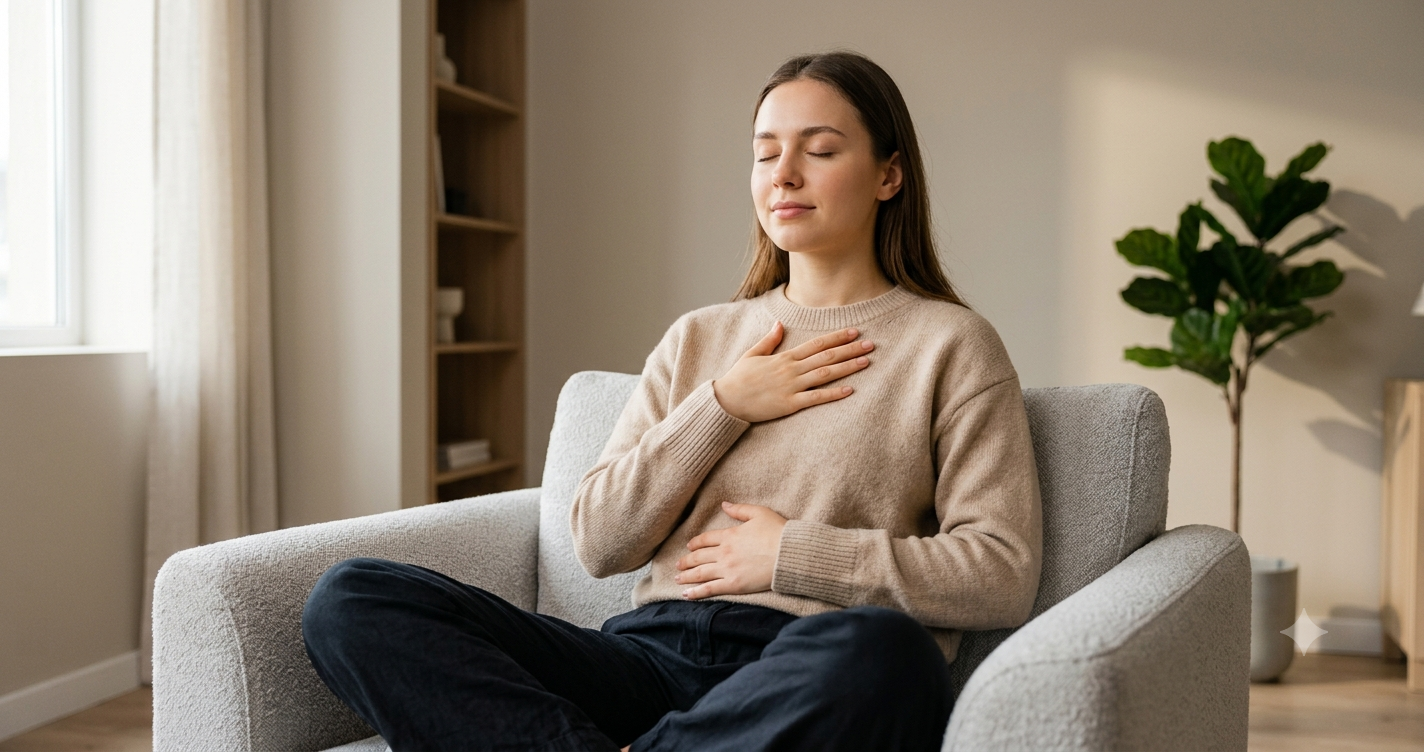
The winner was cyclic sighing, also called the physiological sigh: two inhales through the nose, one long, one short, followed by a slow, extended exhale through the mouth.z
Here’s why it works. The double inhale reopens tiny collapsed air sacs in your lungs. The long exhale is what actually does the calming, it’s the exhale phase that activates your vagus nerve and slows your heart rate. Many people report noticeable relief within a minute or so of starting. It’s discreet enough to do in a meeting or on the subway.
Why the Exhale Matters More Than the Inhale
Most breathing techniques for anxiety, box breathing, 4-7-8 breathing, humming exhales, work through the same mechanism: a longer exhale than inhale. That imbalance is what triggers your parasympathetic nervous system, the “rest and digest” side, rather than the alert, sympathetic side anxiety runs on.
This is also why shallow, fast chest breathing tends to make anxiety worse. It mimics the exact pattern your body produces during a threat response, even when there’s no actual threat present.
Grounding: For When Breathing Isn’t Enough
Breathing alone doesn’t always cut through a racing mind. Grounding techniques give your brain something concrete to focus on instead.
The 5-4-3-2-1 method is the most common: name five things you can see, four you can touch, three you can hear, two you can smell, one you can taste. It works by interrupting the mental spiral rather than trying to reason your way out of it.
What Helps Beyond the Moment
In-the-moment tools calm a spike. They don’t treat the underlying pattern that keeps producing spikes in the first place.
Research on longer breathing practice, roughly 5 to 6 breaths per minute for several minutes, twice daily over 8 to 10 weeks, shows lasting improvements in anxiety and stress reactivity, not just momentary relief. Regular exercise, consistent sleep, and reduced caffeine all genuinely lower baseline anxiety over time.
For anxiety that’s persistent rather than occasional, Cognitive Behavioral Therapy remains the most evidence-backed treatment available, since it addresses the thought patterns driving the anxiety, not just the physical symptoms. Our CBT program is built around exactly this.
A Real Limitation Worth Knowing
Breathwork and grounding are adjuncts. They’re not a treatment for a diagnosed anxiety disorder on their own. If anxiety is showing up daily, disrupting sleep, or affecting how you function, these tools help in the moment, but they’re not a substitute for an actual evaluation.
Also worth knowing: fast, forceful breathing techniques like intentional hyperventilation aren’t the same as the physiological sigh, and they carry real risks for people with cardiovascular conditions, epilepsy, or trauma histories. Stick to slow, extended-exhale methods unless a provider has guided you otherwise.
Quick Answers
What’s the fastest way to calm anxiety in the moment?
The physiological sigh, a double inhale followed by a long exhale, repeated 1 to 3 times, has the strongest research behind it for rapid relief.
Why does slow breathing help with anxiety?
Extending your exhale activates the vagus nerve, which shifts your body out of fight-or-flight and into a calmer state.
Can breathing techniques replace anxiety treatment?
No. They’re useful in-the-moment tools, not a treatment for a diagnosed anxiety disorder. Persistent anxiety benefits most from therapy, often CBT, sometimes alongside medication.
Is grounding better than breathing for anxiety?
Neither is universally better. Breathing works well for physical symptoms; grounding works well for a racing or spiraling mind. Many people benefit from both.
If This Keeps Happening
If anxiety is showing up regularly rather than occasionally, reach out to schedule an evaluation with our Michigan team. In-the-moment tools help, but they work best alongside real treatment, not instead of it.