
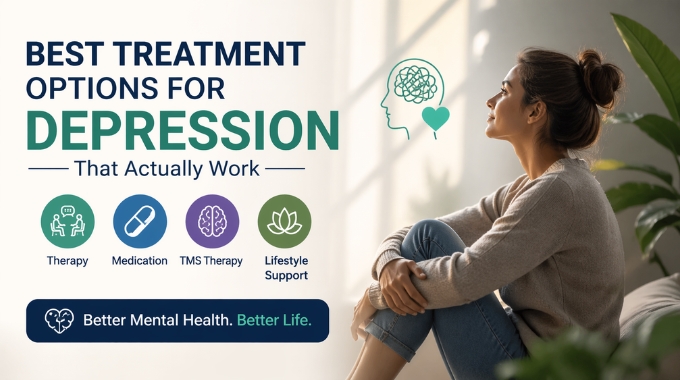
The most effective treatments for depression include psychotherapy (talk therapy), antidepressant medications, and advanced options like TMS therapy. The best approach depends on the severity of symptoms, but a combination of therapy and medical support delivers the strongest results for long-term recovery.
If you’ve been feeling emotionally drained, unmotivated, or stuck in a cycle you can’t explain, it may be more than just a temporary phase.
Depression doesn’t always look obvious. It can quietly affect your thoughts, energy, relationships, and daily life—often without you realizing how serious it has become.
The good news is: depression is highly treatable, and with the right support, many people experience real, lasting improvement.
In this guide, you’ll discover:
- The most effective treatment options
- Which one is right for your situation
- When it’s time to seek professional help
If you’ve been struggling for a while, understanding your options is the first step toward feeling better.
What Is Depression—and Why You Shouldn’t Ignore It
Depression is not just sadness. It’s a medical condition that impacts your brain, mood, and behavior.
It can develop due to:
- Chemical imbalances in the brain
- Chronic stress or trauma
- Genetics
- Hormonal changes
- Life events (loss, failure, burnout)
Ignoring depression can make it worse over time.
What starts as low mood can gradually turn into long-term emotional and physical exhaustion.
Signs You May Need Treatment
If you’ve been experiencing these symptoms for more than two weeks, it’s a sign your mental health needs attention:
- Persistent sadness or emptiness
- Loss of interest in daily activities
- Low energy or constant fatigue
- Difficulty concentrating
- Sleep problems (insomnia or oversleeping)
- Appetite changes
- Feelings of guilt or worthlessness
- Irritability or mood swings
- Thoughts of self-harm or hopelessness
If this feels familiar, don’t ignore it. Early support can prevent symptoms from getting worse.
If you’re noticing these signs, speaking with a mental health professional can help you understand what’s really going on.
Best Treatment Options for Depression That Actually Work
There’s no single “best” treatment for everyone—but there are proven approaches that work effectively when matched to your needs.
1. Psychotherapy (Talk Therapy)
Therapy is often the first and most effective step for treating depression.
It helps you understand your thoughts, emotions, and behavior patterns—and teaches you how to manage them.
Common approaches:
- Cognitive Behavioral Therapy (CBT)
- Interpersonal Therapy (IPT)
- Supportive counseling
Why it works:
- Helps break negative thinking cycles
- Builds coping strategies
- Improves emotional control
Many people begin to notice positive changes within a few sessions.
2. Medication (Antidepressants)
For moderate to severe depression, medication can play a crucial role.
Antidepressants help regulate brain chemicals that influence mood.
Types include:
- SSRIs
- SNRIs
- Other targeted medications
What to expect:
- Takes a few weeks to show results
- Requires monitoring by a psychiatrist
- Often combined with therapy for best outcomes
Medication doesn’t “change who you are”—it helps restore balance so you can function better.
3. TMS Therapy (Advanced Treatment Option)
If medication hasn’t worked or caused side effects, TMS therapy can be a highly effective alternative.
What is it?
A non-invasive treatment that uses magnetic pulses to stimulate brain areas responsible for mood.
Benefits:
- No surgery or sedation
- Minimal side effects
- Effective for treatment-resistant depression
Many patients see improvement within weeks.
4. Lifestyle Changes (Supportive Care)
Lifestyle improvements can enhance recovery when combined with professional treatment.
Helpful habits:
- Regular physical activity
- Balanced diet
- Good sleep routine
- Stress management techniques
These alone may not cure depression—but they significantly support treatment.
Which Depression Treatment Works Best? (Quick Guide)
Choosing the right treatment depends on your symptoms and condition.
Here’s a simple breakdown:
| Condition | Best Approach |
| Mild Depression | Therapy + lifestyle changes |
| Moderate Depression | Therapy + medication |
| Severe Depression | Medication + advanced treatments (like TMS) |
| Treatment-Resistant | TMS therapy or specialized care |
The key is personalized treatment—not a one-size-fits-all approach.
What Happens If You Don’t Treat Depression?
Many people delay treatment, hoping things will improve on their own.
But untreated depression can lead to:
- Worsening symptoms
- Relationship problems
- Work or performance decline
- Physical health issues
- Increased risk of severe mental health conditions
The longer you wait, the harder it can become to recover.
Early treatment leads to faster and more effective recovery.
What to Expect in Your First Appointment
If you’ve never seen a mental health professional before, it’s normal to feel unsure.
Here’s what typically happens:
- Discussion about your symptoms and experiences
- Questions about your medical and emotional history
- Evaluation of your condition
- Creation of a personalized treatment plan
There’s no judgment—just a safe space to understand and help you.
Why Professional Help Makes the Difference
Self-help strategies can only go so far.
A qualified mental health professional can:
- Accurately diagnose your condition
- Recommend the right treatment
- Monitor your progress
- Adjust treatment for better results
This is what turns temporary relief into long-term recovery.
Why Choose Behavioral Healthcare, P.C.?
When it comes to mental health, expertise and trust matter.
At Behavioral Healthcare, you benefit from:
- 30+ years of clinical experience
- Board-certified psychiatrists
- Personalized treatment plans tailored to you
- Evidence-based therapies that deliver results
- Advanced treatment options like TMS
- A compassionate, patient-first approach
You’re not just getting treatment—you’re getting the right care for your unique needs.
Is Depression Treatment Worth It?
A common concern is whether treatment is worth the time, effort, or cost.
The reality is:
Untreated depression can impact your career, relationships, and overall quality of life.
Effective treatment can:
- Improve your mood and energy
- Help you regain focus and motivation
- Strengthen relationships
- Restore your sense of control
Investing in your mental health is one of the most important decisions you can make.
Don’t Wait to Feel Better
Depression can make you feel stuck—but you are not alone, and help is available.
The sooner you take action, the sooner you can start feeling better.
Don’t ignore the signs. Take the first step today.
Call: 888-810-3201
Book Your Appointment Now
Frequently Asked Questions
What is the most effective treatment for depression?
A combination of therapy and medication is usually the most effective. For some cases, advanced treatments like TMS may be needed.
How do I know which depression treatment is right for me?
It depends on your symptoms and severity. A mental health professional can recommend the best personalized plan.
How long does depression treatment take to work?
Therapy may show results in a few sessions, while medication typically takes 2–6 weeks.
Can depression go away without treatment?
Mild cases may improve, but most depression needs proper treatment to avoid worsening.
When should I see a psychiatrist for depression?
If symptoms last more than two weeks or affect daily life, it’s time to seek professional help.
Final Thoughts
Depression is real—but so is recovery.
With the right combination of therapy, medical support, and personalized care, you can regain control of your life and start feeling like yourself again.
You don’t have to go through this alone. The right help can make all the difference.