
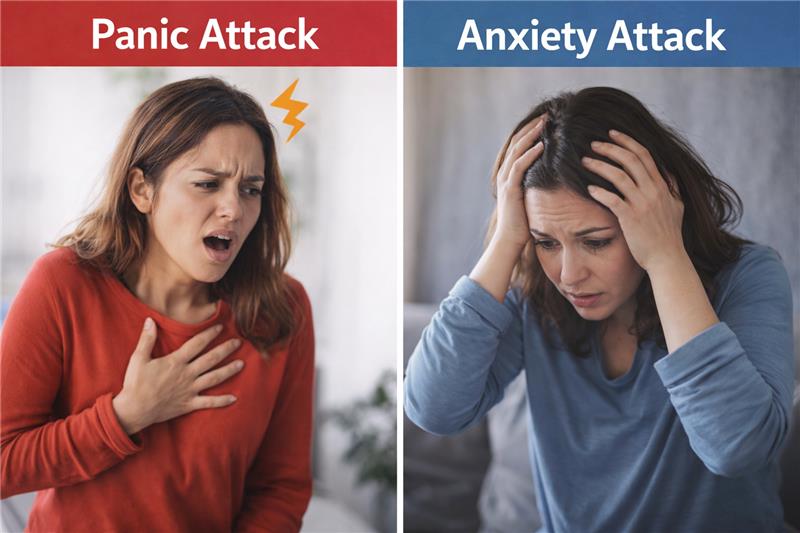
If you’ve ever felt your heart race suddenly, your chest tighten, or a wave of fear rush through your body, you may have paused and wondered: Was that a panic attack or an anxiety attack?
Because these sensations can feel intense and frightening, many people assume the two are the same. In reality, they are closely related but not identical.
Understanding the difference isn’t just about terminology. It can help you feel more in control, reduce fear, and guide you toward the right kind of support. Most importantly, it helps you understand that both experiences are real, valid nervous system responses, not personal failures or weaknesses.
In this guide, we’ll gently walk through what panic attacks and anxiety attacks are, how they feel, why they happen, how long they last, how they’re treated, and when it’s time to seek professional help.
Understanding Anxiety and Panic in Mental Health
To understand panic and anxiety attacks, it helps to first understand anxiety itself.
Anxiety is a normal human emotion. It’s part of the body’s built in alarm system, designed to protect us from danger and prepare us to respond to challenges. In short bursts, anxiety can be helpful.
However, when anxiety becomes persistent, overwhelming, or disconnected from real threats, it can develop into an anxiety disorder. In this state, the nervous system stays activated for too long, even when there is no immediate danger.
Panic attacks come from this same system but behave differently. Instead of building slowly, panic attacks involve a sudden surge of intense fear. To understand that difference more clearly, let’s start by looking at anxiety attacks first.
What Is an Anxiety Attack?
Anxiety attacks are not an official medical diagnosis, but the term is widely used to describe periods when anxiety becomes especially intense and difficult to manage.
Anxiety attacks typically develop gradually. They often begin with ongoing stress or worry and slowly intensify as the nervous system remains in a prolonged state of alert. Because this tension builds over time, anxiety attacks tend to feel exhausting rather than sudden.
Understanding how anxiety attacks develop makes it easier to recognize their symptoms.
Explore expert insights on [recovering from anxiety and the factors that affect progress].
Common Symptoms of an Anxiety Attack
An anxiety attack may include:
- Persistent worry or racing thoughts
- Feeling tense, restless, or constantly on edge
- Muscle tightness or body aches
- Fatigue or mental exhaustion
- Difficulty concentrating
- Irritability
- Shortness of breath
- Increased heart rate
- Sweating
- Nausea or stomach discomfort
These symptoms can interfere with daily functioning, making it harder to work, socialize, or relax. Anxiety attacks are commonly associated with generalized anxiety disorder (GAD), social anxiety, and other anxiety related conditions.
Now that anxiety attacks are clearer, it becomes easier to understand how panic attacks differ.
What Is a Panic Attack?
A panic attack feels very different from an anxiety attack.
A panic attack is a sudden and intense surge of fear or discomfort that reaches its peak within minutes. It can happen without warning, even when a person feels calm or is asleep.
Because panic attacks cause powerful physical sensations, many people believe they are having a medical emergency, such as a heart attack. While panic attacks feel terrifying, they are not dangerous and always pass.
To understand why panic attacks are so frightening, it helps to look at the symptoms they produce.
Common Symptoms of a Panic Attack
Panic attack symptoms often include:
- Rapid or pounding heartbeat
- Chest pain or tightness
- Shortness of breath or choking sensation
- Dizziness or lightheadedness
- Shaking or trembling
- Sweating
- Numbness or tingling sensations
- Feeling detached from reality, derealization or depersonalization
- Fear of losing control or dying
Panic attacks are a core feature of panic disorder, but they can also occur alongside anxiety, depression, PTSD, or OCD.
Seeing both experiences explained together helps make the distinction clearer.
Panic Attack vs Anxiety Attack Comparison
Comparing panic attacks and anxiety attacks helps clarify what your body may be experiencing.
| Feature | Panic Attack | Anxiety Attack |
| Onset | Sudden, without warning | Gradual buildup |
| Trigger | Often none | Usually stress related |
| Intensity | Very intense | Moderate to intense |
| Duration | 5 to 30 minutes | Hours or longer |
| Fear level | Extreme and overwhelming | Persistent worry |
| Physical response | Strong and sudden | Slower, sustained |
| Diagnostic status | Medically recognized | Informal term |
| Common association | Panic disorder | Anxiety disorders |
While this comparison helps, many people still wonder why both experiences feel so physical.
Key Differences Explained in Simple Terms
The most important difference lies in how quickly symptoms begin and how long they last.
Panic attacks come on suddenly and peak quickly, which makes them feel dramatic and alarming. Anxiety attacks build slowly and tend to linger, creating prolonged discomfort rather than an intense spike.
Another difference is anticipation. Anxiety attacks are often fueled by ongoing worry about future events. Panic attacks can appear unexpectedly, even during rest.
To understand why both feel so physical, we need to look at what’s happening inside the body.
Why Panic and Anxiety Attacks Feel So Physical
Both panic and anxiety attacks activate the body’s fight or flight response.
When the brain perceives danger, it releases stress hormones like adrenaline. These hormones increase heart rate, tighten muscles, speed up breathing, and redirect energy away from digestion.
During panic or anxiety attacks, this response turns on without real danger. The sensations feel intense because they are real physical reactions, just triggered by the nervous system rather than an external threat.
This response also helps explain what causes these attacks to occur.
What Causes Panic Attacks?
Panic attacks may be influenced by:
- Chronic stress
- Past trauma
- Genetic vulnerability
- High caffeine or stimulant intake
- Major life changes
- Underlying anxiety or mood disorders
In some cases, panic attacks occur without a clear trigger, which can make them feel unpredictable and frightening.
Anxiety attacks, however, usually have more identifiable patterns.
What Causes Anxiety Attacks?
Anxiety attacks are commonly linked to:
- Ongoing stress
- Work or financial pressure
- Relationship difficulties
- Health related fears
- Social or performance situations
- Overthinking and rumination
Because anxiety attacks develop gradually, they often last longer than panic attacks. This naturally raises questions about duration.
How Long Do Panic Attacks and Anxiety Attacks Last?
Panic attacks usually peak within 10 minutes and resolve within about 30 minutes, though mild symptoms may linger.
Anxiety attacks can last for hours, days, or even weeks, depending on stress levels and coping strategies. The nervous system often needs time to fully settle afterward.
When symptoms are intense or recurring, people often worry about their physical health.
Treatment Options for Panic Attacks and Anxiety Attacks
Both panic attacks and anxiety attacks are highly treatable. Treatment often includes:
- Cognitive Behavioral Therapy (CBT)
- Exposure therapy
- Medications such as SSRIs or SNRIs
- Nervous system regulation techniques
- Lifestyle changes involving sleep, nutrition, and movement
Working with a licensed mental health professional helps create a treatment plan tailored to individual needs.
Alongside treatment, it’s helpful to know how to cope in the moment.
Practical Coping Tips During an Attack
During a Panic Attack
- Focus on slow, steady breathing
- Use grounding techniques, naming things you see or touch
- Remind yourself that the panic will pass
During an Anxiety Attack
- Reduce stimulation
- Write down worries to externalize them
- Practice progressive muscle relaxation
If attacks continue to interfere with daily life, professional support becomes especially important.
When to Seek Professional Help
You should consider seeking professional support if:
- Attacks are frequent or worsening
- Fear leads to avoidance of daily activities
- Anxiety or panic interferes with work or relationships
- You experience symptoms of depression
Seeking help is not a failure. It’s an act of self care.
Frequently Asked Questions
Are panic attacks and anxiety attacks the same?
No. Panic attacks are sudden and intense, while anxiety attacks develop gradually.
Can anxiety attacks turn into panic attacks?
Yes. Prolonged anxiety can sometimes escalate into a panic attack.
Can depression cause panic attacks?
Yes. Anxiety and depression often overlap.
Do panic attacks mean I have a mental disorder?
Not necessarily. Some people experience panic attacks without a diagnosed disorder.
How can panic attacks be managed naturally?
Breathing exercises, therapy, stress management, and reducing caffeine can help.
Final Thoughts: You’re Not Alone
Panic attacks and anxiety attacks are common, valid experiences, and they are treatable. Understanding the difference can replace fear with clarity and help you respond with compassion toward yourself.
If you’re struggling with anxiety, panic attacks, or depression, support is available, and recovery is possible. You don’t have to go through this alone.
For more clarity, read this helpful article on [panic attacks vs anxiety attacks].