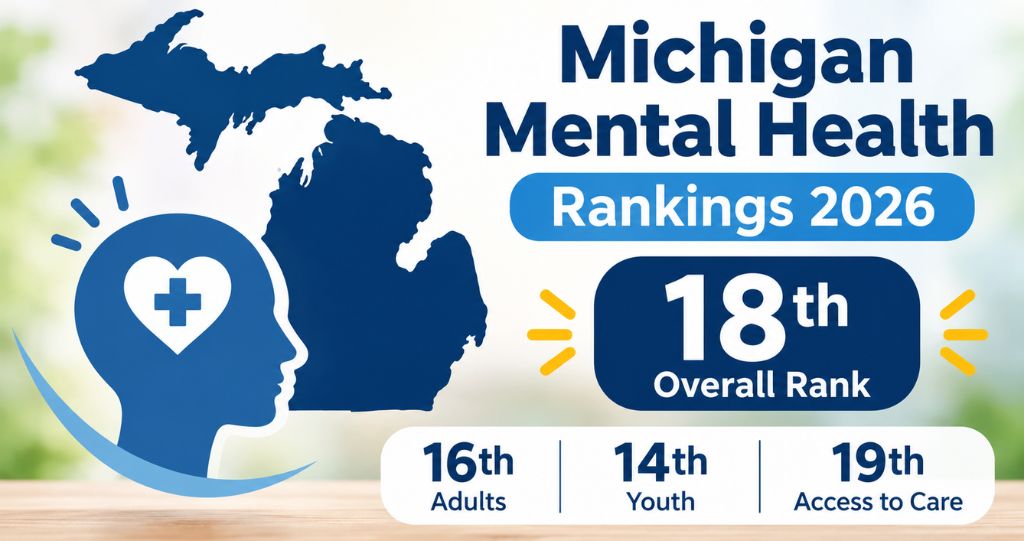
Michigan ranks 18th overall in Mental Health America’s (MHA) State of Mental Health in America 2026 report. The state ranks 16th for adults, 14th for youth, and 19th for access to mental health care.
These rankings reveal more than a state’s position. They highlight challenges Michigan residents may face when looking for affordable treatment, qualified providers, and timely mental health support.
Whether you are researching state statistics or trying to understand where to find care, here’s what the latest report tells us.
Michigan’s 2026 Mental Health Rankings
| Category | Michigan’s rank |
| Overall mental health | 18th |
| Adult mental health | 16th |
| Youth mental health | 14th |
| Mental health prevalence | 19th |
| Access to care | 19th |
Source: Mental Health America’s 2026 State of Mental Health in America report.
The 2026 report evaluates all 50 states and Washington, D.C., using 17 measures related to mental health conditions and access to care. Most of the data were collected through 2024, so these rankings represent the latest available reporting period rather than real-time conditions.
What Do Michigan’s Mental Health Statistics Show?
The numbers behind Michigan’s ranking help explain the state’s mental health needs.
1. Adult mental illness remains a significant concern
MHA estimates that 23.57% of Michigan adults, approximately 1.86 million people, experienced any mental illness during the 2023–2024 measurement period.
The national rate in the 2026 state-level table is 23.12%. This comparison shows why continued access to appropriate mental health support matters.
2. Insurance and treatment costs create barriers
According to MHA’s 2026 data:
- 5.40% of Michigan adults with any mental illness were uninsured during 2023–2024, representing approximately 97,000 people.
- 24.20% of Michigan adults reporting 14 or more mentally unhealthy days per month could not see a doctor because of cost in 2024.
These figures highlight how insurance gaps and out-of-pocket expenses can make it harder to seek professional support.
3. Many young people with depression do not receive care
MHA reports that 41.40% of Michigan youth ages 12–17 who experienced a major depressive episode did not receive mental health services during the 2023–2024 measurement period. This represents approximately 50,000 young people.
Early recognition and appropriate support can help families address mental health concerns before they interfere further with everyday life.
Source for these statistics: MHA’s 2026 report. Each statistic reflects its stated measurement period.
Why Is Mental Health Care Difficult to Access in Michigan?
Michigan’s access-to-care ranking reflects several challenges. Four important areas deserve attention.
1. Cost and Insurance Gaps
Uninsured individuals, high deductibles, copayments, and limited provider networks can make treatment difficult to afford. Even people with insurance may struggle to find an available in-network professional.
2. Provider Shortages
Mental health professionals are not distributed equally across Michigan. The MDHHS February 2024 workforce report identified psychiatrist workforce gaps in several counties, including Ontonagon, Keweenaw, Baraga, Iron, and Menominee.
These findings refer specifically to psychiatrist full-time equivalents. They do not mean that these counties have no other mental health services.
See the MDHHS 2024 Statewide Rational Service Area Plans for the workforce information.
3. Unmet Youth Mental Health Needs
Young people may face stigma, privacy concerns, or uncertainty about seeking help. Parents and caregivers can support them by listening without judgment, noticing persistent changes in behavior, and speaking with a qualified healthcare professional when concerns arise.
MHA also considers students receiving support through Individualized Education Programs (IEPs). An IEP is an educational support mechanism, not a barrier by itself.
4. Substance Use Treatment Gaps
Some individuals experience mental health and substance use concerns together. Cost, stigma, and difficulty finding suitable services can delay treatment. Access to appropriate behavioral health support is important for both concerns.

Where Can Michigan Residents Find Mental Health Support?
Knowing where to start can make seeking care easier.
Find local public services: Use the MDHHS Community Mental Health Services Programs directory to identify services in your county. You can also explore the state’s Get Help Now resources.
Get immediate crisis support: Call or text 988 (Suicide & Crisis Lifeline), available 24/7. Michigan residents can also learn about the Michigan Crisis and Access Line (MiCAL).
988 provides crisis support in the United States. It does not replace clinical assessment or ongoing treatment. For a life-threatening emergency, call 911.
Understand your care options: Therapy can help people explore emotional concerns and develop coping strategies. Psychiatric care involves medical assessment and may include medication when clinically appropriate. Read MiMood’s guide on whether to see a therapist or psychiatrist for anxiety.
How Behavioral Health Care, P.C. Supports Mental Health Care in Michigan
Behavioral Health Care, P.C. (MiMood) provides psychiatric and therapy services in Battle Creek and Grand Rapids, Michigan. Its services include support for concerns such as anxiety, depression, ADHD, bipolar disorder, and other mental health conditions.
If you are exploring professional support, visit MiMood’s mental health services page to learn more about available care.
You can also contact MiMood or call 888-810-3201 to ask about services, appointment availability, and insurance.
Frequently Asked Questions
What is Michigan’s mental health ranking in 2026?
Michigan ranks 18th overall in MHA’s 2026 report, which compares mental health needs and access to care across states.
What percentage of Michigan adults experience mental illness?
MHA estimates that 23.57% of Michigan adults, approximately 1.86 million people, experienced any mental illness during the 2023–2024 measurement period.
Why can mental health care be difficult to access in Michigan?
Treatment costs, insurance limitations, provider shortages, and unmet youth and substance use treatment needs can create barriers.
Where can I find mental health services in Michigan?
Residents can contact their local Community Mental Health Services Program through the MDHHS directory. MiMood also provides psychiatric and therapy services in Battle Creek and Grand Rapids.
Final Thoughts
Michigan’s 2026 mental health ranking highlights the importance of affordable treatment, accessible providers, and early support for adults and young people.
Although statewide statistics help explain the bigger picture, every person’s mental health needs are different. You do not need to wait until your concerns become overwhelming to seek professional guidance.
If you are considering support in Battle Creek or Grand Rapids, contact MiMood at 888-810-3201 to learn about available mental health services.
Medical Disclaimer: This article is for educational purposes only and is not a substitute for professional medical advice, diagnosis, or treatment. Consult a qualified healthcare professional about personal mental health concerns.