
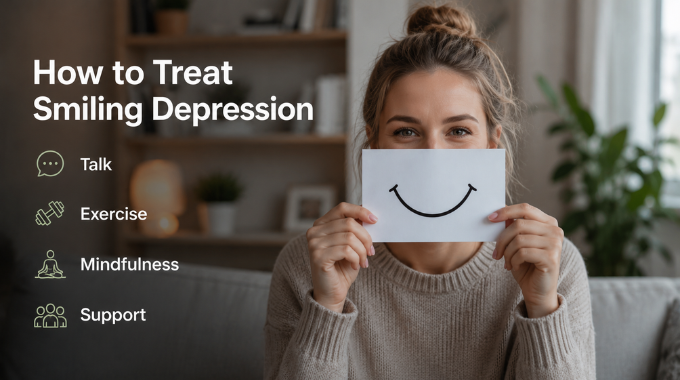
Treating smiling depression begins with recognizing that emotional pain can exist even when someone appears happy, successful, or socially active. Because people with smiling depression often hide their struggles, early support and consistent care are especially important.
Acknowledge the Symptoms
The first step is accepting that the feelings are real and valid. Many individuals dismiss their emotional exhaustion because they continue functioning in daily life. Recognizing persistent sadness, emotional numbness, anxiety, hopelessness, or burnout is essential for recovery.
Seek Professional Help
Talking to a licensed mental health professional can help identify underlying depression and create a treatment plan. Therapy options may include:
- Cognitive Behavioral Therapy (CBT)
- Talk therapy or counseling
- Stress and emotional management techniques
- Medication when recommended by a psychiatrist
Professional support can help individuals express emotions they may have been hiding for a long time.
Build a Strong Support System
Isolation often worsens depression. Opening up to trusted friends, family members, or support groups can reduce emotional pressure and create a sense of connection. Honest conversations may help people feel less alone in their struggles.
Practice Healthy Lifestyle Habits
Daily habits can significantly affect mental health. Helpful lifestyle changes include:
- Maintaining regular sleep patterns
- Eating balanced and nutritious meals
- Exercising regularly
- Limiting alcohol and substance use
- Taking breaks from overwhelming responsibilities
Even small self-care routines can improve emotional well-being over time.
Reduce the Pressure to “Appear Fine”
People with smiling depression often feel the need to constantly appear positive or successful. Learning to express vulnerability and set realistic expectations can reduce emotional exhaustion. It is healthy to admit when support is needed.
Manage Stress and Emotional Burnout
Mindfulness practices, meditation, journaling, breathing exercises, and hobbies can help manage stress levels. Creating time for rest and emotional recovery is an important part of treatment.
Stay Consistent With Treatment
Recovery from depression is usually gradual. Continuing therapy sessions, following treatment recommendations, and checking in with mental health professionals regularly can help prevent symptoms from worsening or returning.
Know When Immediate Help Is Needed
If feelings of hopelessness become severe or include thoughts of self-harm or suicide, immediate professional or emergency support is necessary. Crisis helplines and mental health services can provide urgent assistance and protection.
Treating smiling depression requires compassion, honesty, and support. With proper care and emotional understanding, individuals can improve their mental health and regain a healthier sense of balance and well-being.
Causes of Smiling Depression
Smiling depression can develop from a combination of emotional, psychological, and social factors. While the exact causes vary from person to person, some common triggers include:
- High stress from work, academics, or relationships
- Pressure to appear successful or emotionally strong
- Childhood trauma or unresolved emotional experiences
- Social isolation despite active social lives
- Fear of judgment or stigma around mental health
- Perfectionism and unrealistic expectations
- Major life changes, grief, or burnout
Many individuals become skilled at hiding emotional pain while continuing to meet daily responsibilities.
Signs Someone May Be Hiding Depression
Because smiling depression is often concealed, the warning signs can be subtle. Some behaviors that may indicate hidden emotional struggles include:
- Constantly pretending to be happy around others
- Overworking or staying excessively busy
- Sudden withdrawal when alone
- Irritability or emotional exhaustion
- Difficulty sleeping or changes in appetite
- Loss of interest in activities once enjoyed
- Feeling empty despite outward success
- Avoiding conversations about personal emotions
Recognizing these signs early can encourage timely support and treatment.
How to Support Someone With Smiling Depression
Supporting someone with hidden depression requires patience, empathy, and nonjudgmental communication.
Listen Without Judging
Allow them to talk openly without minimizing their feelings or offering quick solutions.
Encourage Professional Help
Suggest therapy or counseling gently and supportively rather than forcing the conversation.
Check In Regularly
Simple messages or conversations can remind someone that they are not alone.
Avoid Toxic Positivity
Phrases like “just stay positive” may unintentionally dismiss their emotional pain.
Be Patient
Recovery takes time, and emotional healing may not happen quickly.
Frequently asked question
What is smiling depression?
It is hidden depression where someone appears happy outwardly while struggling emotionally inside.
Is smiling depression real?
Yes, it is a commonly recognized form of hidden emotional distress, though not an official diagnosis.
What are the signs of smiling depression?
Common signs include sadness, emotional exhaustion, overworking, anxiety, and hiding feelings.
Can successful people have smiling depression?
Yes, many people with smiling depression appear successful and socially active.
How is smiling depression treated?
Treatment may include therapy, lifestyle changes, emotional support, and professional mental health care.
Conclusion
Smiling depression can be difficult to recognize because many people hide their emotional struggles behind a happy appearance. Even when someone seems successful or positive, they may still be dealing with stress, sadness, or emotional exhaustion internally. Recognizing the signs early, seeking professional help, and building a strong support system can make a significant difference. With proper treatment, self-care, and emotional support, recovery is possible and mental well-being can improve over time.