
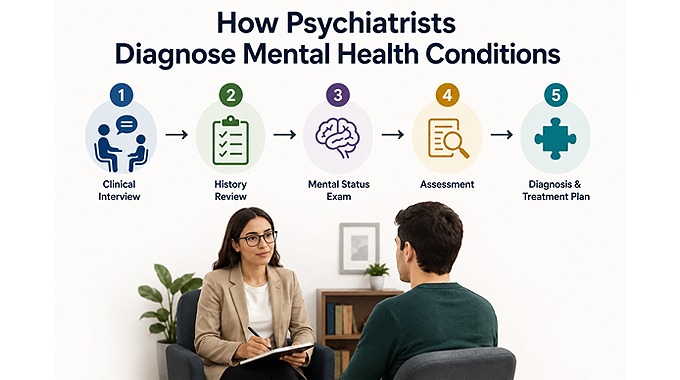
Psychiatrists diagnose mental health conditions by evaluating a person’s emotional, behavioral, psychological, and physical symptoms. The process usually includes patient interviews, medical history reviews, mental status examinations, and diagnostic criteria from the DSM-5. Accurate diagnosis is important because many mental health disorders have overlapping symptoms, and proper identification helps create an effective treatment plan. Psychiatrists may also use psychological assessments, lab tests, or screenings to rule out physical health conditions that can affect mental well-being.
What Does a Psychiatrist Do?
Psychiatrists are medical doctors who specialize in mental health. They diagnose, treat, and manage emotional, behavioral, and psychological conditions such as depression, anxiety disorders, bipolar disorder, schizophrenia, PTSD, and ADHD. Their role is to understand how mental and physical health are connected and provide treatments that improve a patient’s overall well-being.
Difference Between Psychiatrists, Psychologists, and Therapists
Although these professionals all work in mental health care, their roles are different.
- Psychiatrists are medical doctors who can diagnose mental health disorders, prescribe medication, and provide medical treatment.
- Psychologists focus on psychological assessments, behavioral therapy, and counseling but usually cannot prescribe medication.
- Therapists or counselors help individuals cope with emotional challenges through talk therapy, guidance, and support strategies.
Psychiatrists often work together with psychologists and therapists to provide complete mental health care for patients.
Learn more: Psychiatrist vs Therapist: What’s the Difference and Which One Do You Need?
Initial Psychiatric Evaluation
The initial psychiatric evaluation is the first step psychiatrists take to understand a person’s mental health condition. During this process, they gather information about symptoms, emotions, behavior, medical history, and personal experiences to make an accurate diagnosis and create a suitable treatment plan.
Patient Interview
The evaluation usually begins with a patient interview where psychiatrists discuss the individual’s thoughts, feelings, behaviors, and daily challenges.
Discussing Symptoms and Concerns
Patients share symptoms such as sadness, anxiety, mood swings, stress, panic attacks, or difficulty concentrating. Psychiatrists assess how these issues affect daily life and emotional well-being.
Emotional, Behavioral, and Physical Symptoms
Psychiatrists evaluate different types of symptoms, including:
- Emotional symptoms like fear, hopelessness, or irritability
- Behavioral changes such as isolation or unusual actions
- Physical symptoms like fatigue, sleep problems, or appetite changes
Duration and Severity of Symptoms
They also assess how long the symptoms have lasted and how severe they are. This helps determine whether the condition is temporary, recurring, or more serious.
Explore psychiatrist-reviewed insights from Behavioral Healthcare P.C. on anxiety recovery timelines and healing.
Medical and Personal History
Psychiatrists review the patient’s background to identify factors that may affect mental health.
Family History of Mental Illness
Family history of conditions such as depression, anxiety, or bipolar disorder may help identify genetic risk factors.
Past Medical Conditions
Certain medical conditions or illnesses can contribute to mental health symptoms, so physical health history is also reviewed.
Medications and Substance Use
Psychiatrists ask about medications, alcohol use, smoking, or substance use because these can affect mental health and treatment outcomes.
Major Life Events and Trauma
Stressful experiences, trauma, abuse, grief, or major life changes are also discussed to better understand emotional triggers and mental health challenges.
Mental Status Examination (MSE)
A Mental Status Examination (MSE) is a structured assessment psychiatrists use to evaluate a person’s current mental and emotional condition. It helps them understand how a patient thinks, feels, behaves, and responds during the evaluation. The examination provides important information that supports accurate diagnosis and treatment planning.
- Appearance and behavior – Psychiatrists observe physical appearance, body language, eye contact, grooming, and overall behavior during the session.
- Mood and emotional responses – They assess emotions such as sadness, anxiety, irritability, mood swings, or emotional numbness.
- Thought patterns and speech – Speech clarity, communication style, and thought processes are evaluated to identify confusion, racing thoughts, or disorganized thinking.
- Memory, attention, and concentration – Cognitive abilities like memory, focus, and concentration are checked to understand mental functioning.
- Judgment and insight – Psychiatrists assess decision-making ability and whether the patient understands their mental health condition and need for treatment.
Diagnostic Tools Psychiatrists Use
Psychiatrists use different diagnostic tools and assessments to accurately identify mental health conditions. These tools help evaluate emotional, behavioral, cognitive, and physical symptoms while ruling out other possible medical causes. A combination of psychological assessments, medical tests, and clinical guidelines is often used during the diagnostic process.
Psychological Assessments
Psychological assessments help psychiatrists understand a person’s mental and emotional state more clearly.
- Questionnaires and screening tools – Patients may complete mental health questionnaires that help identify symptoms related to stress, anxiety, depression, ADHD, or other disorders.
- Depression and anxiety scales – Standardized scales are commonly used to measure the severity of depression, anxiety, panic attacks, and mood-related symptoms.
Medical Tests
In some cases, psychiatrists may recommend medical tests to rule out physical conditions that can affect mental health.
- Blood tests to rule out physical causes – Blood tests can help identify issues such as thyroid disorders, vitamin deficiencies, hormonal imbalances, or other medical conditions linked to mental health symptoms.
- Brain imaging in certain cases – Brain scans or imaging tests may be used when neurological conditions, head injuries, or unusual symptoms need further evaluation.
DSM-5 Criteria
Psychiatrists also use professional diagnostic guidelines to identify specific mental health disorders.
- Understanding diagnostic guidelines – The DSM-5 (Diagnostic and Statistical Manual of Mental Disorders) provides standardized criteria used by mental health professionals worldwide.
- Matching symptoms with clinical criteria – Psychiatrists compare a patient’s symptoms, behavior patterns, and symptom duration with DSM-5 criteria to make an accurate diagnosis.
Common Mental Health Conditions Psychiatrists Diagnose
Psychiatrists diagnose and treat a wide range of mental health conditions that affect emotions, behavior, thinking patterns, and daily functioning. Each condition has different symptoms and severity levels, which is why accurate diagnosis is important for proper treatment and long-term mental well-being.
- Depression – A mood disorder that causes persistent sadness, low energy, hopelessness, loss of interest, and emotional distress.
- Anxiety Disorders – Conditions that involve excessive fear, worry, panic attacks, nervousness, or constant stress that interferes with daily life.
- Bipolar Disorder – A mental health condition characterized by extreme mood swings, including emotional highs (mania) and depressive episodes.
- Schizophrenia – A serious mental disorder that affects thinking, behavior, emotions, and perception of reality, sometimes causing hallucinations or delusions.
- PTSD (Post-Traumatic Stress Disorder) – A condition that develops after experiencing or witnessing traumatic events, leading to flashbacks, fear, anxiety, and emotional distress.
- OCD (Obsessive-Compulsive Disorder) – A disorder involving unwanted repetitive thoughts (obsessions) and repeated behaviors or rituals (compulsions).
- ADHD (Attention-Deficit/Hyperactivity Disorder) – A condition that affects attention, focus, impulse control, and activity levels in both children and adults.
What Happens After a Diagnosis?
After diagnosing a mental health condition, psychiatrists create a personalized treatment plan based on the patient’s symptoms, medical history, and overall mental well-being. The goal of treatment is to manage symptoms, improve daily functioning, and support long-term emotional health. Treatment plans may vary depending on the condition and the severity of symptoms.
Treatment Planning
Psychiatrists recommend different treatment approaches to help patients manage their mental health effectively.
- Medication options – Medications may be prescribed to help control symptoms such as anxiety, depression, mood swings, or attention difficulties.
- Therapy recommendations – Psychiatrists may suggest psychotherapy, counseling, cognitive behavioral therapy (CBT), or other therapeutic approaches to improve emotional and behavioral health.
- Lifestyle and stress management – Healthy habits such as regular exercise, proper sleep, balanced nutrition, mindfulness, and stress management techniques are often recommended to support recovery.
Follow-Up Care
Mental health treatment usually requires ongoing monitoring and support to ensure progress and effectiveness.
- Monitoring progress – Psychiatrists regularly assess symptom improvement, emotional stability, and treatment response during follow-up appointments.
- Adjusting treatment when needed – Treatment plans may be modified over time by changing medications, therapy methods, or coping strategies depending on the patient’s progress and needs.
When Should You See a Psychiatrist?
Seeing a psychiatrist can help when emotional, behavioral, or mental health symptoms begin affecting daily life, relationships, work, or overall well-being. Early diagnosis and treatment can prevent symptoms from becoming more severe and improve long-term mental health outcomes.
- Persistent sadness or anxiety – Ongoing feelings of sadness, hopelessness, excessive worry, fear, or anxiety that do not improve over time may require professional support.
- Changes in sleep or behavior – Sudden changes in sleep patterns, appetite, mood, energy levels, or behavior can be signs of an underlying mental health condition.
- Difficulty functioning daily – Struggling to focus, complete daily tasks, maintain relationships, or perform well at work or school may indicate the need for psychiatric evaluation.
- Suicidal thoughts or emotional distress – Severe emotional pain, self-harm thoughts, or suicidal thinking should never be ignored and require immediate professional help and support.
Frequently asked question
1.How long does a psychiatric diagnosis take?
A psychiatric diagnosis can take one session or multiple appointments depending on the complexity of the symptoms and condition.
2.Can mental health conditions be misdiagnosed?
Yes, mental health conditions can sometimes be misdiagnosed because many disorders have similar symptoms.
3.Do psychiatrists use lab tests for diagnosis?
Yes, psychiatrists may use blood tests or other medical tests to rule out physical health conditions affecting mental health.
4.Is a mental health diagnosis permanent?
No, a mental health diagnosis can change over time as symptoms improve or new information becomes available.
5.What is the difference between a psychiatrist and a therapist?
A psychiatrist is a medical doctor who can diagnose conditions and prescribe medication, while a therapist mainly provides counseling and talk therapy.
Conclusion
Diagnosing mental health conditions is a careful and detailed process that involves understanding a person’s emotional, behavioral, psychological, and physical symptoms. Psychiatrists use evaluations, assessments, medical history, and diagnostic tools to identify mental health disorders accurately and recommend suitable treatment options.
Early diagnosis plays an important role in improving treatment outcomes and helping individuals manage symptoms more effectively. With the right support, therapy, medication, and lifestyle changes, many people can improve their mental well-being and quality of life.
If you or someone you know is experiencing ongoing emotional distress, anxiety, depression, or behavioral changes, seeking professional help from a psychiatrist can be an important step toward recovery and better mental health.