
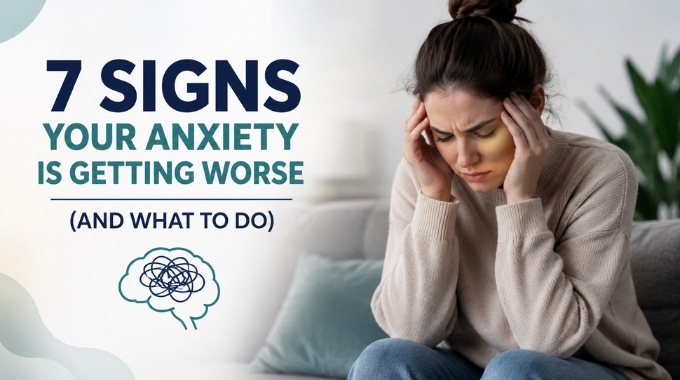
Anxiety doesn’t always show up loudly. Sometimes, it builds quietly—becoming part of your daily routine before you even realize it’s getting worse.
What once felt manageable can slowly turn into constant worry, restlessness, and emotional exhaustion.
When anxiety starts to intensify, it affects how you think, feel, and function every day. Recognizing the early warning signs can help you take control before it begins to overwhelm your life.
In this guide, we’ll break down the key signs your anxiety may be worsening—and what you can do to regain balance.
What Does “Worsening Anxiety” Actually Mean?
Anxiety naturally comes and goes, especially during stressful situations. But when it becomes more frequent, intense, or harder to control, it may be a sign that it’s escalating.
Instead of short-lived worry, you may start experiencing ongoing mental tension, physical discomfort, and difficulty focusing on everyday tasks.
Worsening anxiety isn’t just about feeling stressed—it’s about losing your sense of calm and control more often than usual.
Also read: How to Help Someone With Anxiety
7 Signs Your Anxiety Is Getting Worse
Anxiety can build slowly, showing up as constant worry, poor sleep, irritability, low focus, or avoiding situations. You may also feel physically tense or emotionally drained. Noticing these early signs can help you manage anxiety before it worsens.
1. Your Thoughts Feel Constant and Uncontrollable
You may notice your mind racing throughout the day, jumping from one worry to another without pause.
Even when nothing is wrong, your brain searches for something to worry about.
What to do:
Practice grounding techniques like focusing on your breath or your surroundings. This helps bring your attention back to the present moment.
2. You’re Easily Irritated or Emotionally Drained
Small things start to feel overwhelming. You may snap at others or feel emotionally exhausted without a clear reason.
What to do:
Give yourself space to recharge. Reducing stimulation and taking intentional breaks can calm your nervous system.
3. Your Sleep Is Getting Worse
You might struggle to fall asleep, wake up frequently, or feel tired even after a full night in bed.
An anxious mind rarely switches off easily.
What to do:
Create a calming nighttime routine. Avoid screens before bed and try relaxation practices like deep breathing or light stretching.
4. Physical Symptoms Are Becoming More Noticeable
Anxiety doesn’t just stay in your mind—it shows up in your body.
You may experience:
- Tight muscles
- Headaches
- Rapid heartbeat
- Constant fatigue
What to do:
Regular movement, hydration, and slow breathing exercises can help reduce physical tension.
5. You Start Avoiding Situations
Things you once handled comfortably—social events, responsibilities, or decisions—may now feel overwhelming.
Avoidance might feel like relief, but it often makes anxiety stronger over time.
What to do:
Take small, manageable steps instead of avoiding completely. Gradual exposure helps rebuild confidence.
6. You Can’t Focus or Make Decisions Easily
Your mind feels cluttered, making even simple choices feel difficult.
You may second-guess everything or feel stuck in indecision.
What to do:
Break tasks into smaller steps and focus on completing one thing at a time. Simplicity reduces mental pressure.
7. You Feel Constantly On Edge
There’s a lingering sense that something isn’t right—even when everything seems fine.
This ongoing tension can make it hard to relax or feel at peace.
What to do:
Learn calming techniques like slow breathing (inhale for 4, exhale for 6) and identify patterns or triggers behind your anxiety.
Why Anxiety Gets Worse Over Time
Anxiety often builds due to a combination of factors:
- Ongoing stress without proper release
- Suppressed emotions
- Lack of rest or recovery
- Negative thinking patterns
- Avoidance behaviors
The more these patterns repeat, the stronger anxiety becomes.
But it’s important to remember:
Anxiety is not permanent—it’s something you can learn to manage.
Learn more: Managing Anxiety: Effective Strategies for a Healthier Mind
Simple Ways to Regain Control on Anxiety
You don’t need a complete life overhaul to feel better. Small, consistent changes can make a big difference.
- Stay present instead of focusing on “what ifs”
- Move your body regularly
- Limit information overload (news, social media)
- Talk to someone you trust
- Create daily moments of calm
Progress doesn’t come from doing everything perfectly—it comes from doing small things consistently.
When to Seek Help
If anxiety begins to interfere with your daily life, relationships, or well-being, it may be time to seek professional support.
Consider reaching out if:
- Your thoughts feel uncontrollable most of the time
- Anxiety is affecting your sleep or health
- You feel overwhelmed on a daily basis
Getting help is not a weakness—it’s a step toward feeling better.
Take Back Your Peace of Mind
You don’t have to live in a constant state of worry.
Understanding the signs is the first step toward change.
The sooner you recognize what’s happening, the easier it becomes to take control and build healthier mental habits.
Frequently asked question
- How do I know if my anxiety is getting worse?
If your worry feels constant, harder to control, and starts affecting your sleep, mood, or daily routine, it may be worsening. - Can anxiety get worse without noticing it?
Yes, anxiety often builds gradually, making it easy to overlook the signs until it starts impacting your daily life. - What are the most common symptoms of severe anxiety?
Racing thoughts, restlessness, fatigue, trouble sleeping, irritability, and difficulty concentrating are common signs. - How can I calm my anxiety quickly?
Deep breathing, grounding techniques, and focusing on the present moment can help reduce anxiety in the moment. - When should I seek professional help for anxiety?
If anxiety interferes with your daily life, relationships, or sleep, it’s a good idea to seek professional support.
Final Thoughts
Anxiety can slowly take up more space in your life—but it doesn’t have to stay that way.
By recognizing the signs early and taking small steps to manage it, you can regain clarity, calm, and control.
Change doesn’t happen overnight—but every small step counts.